
One sink draining slowly and several fixtures backing up require different checks. A blockage may affect an individual fixture, a shared branch or the main drain. Note which fixtures are affected, whether using one causes water to rise elsewhere, and whether the problem keeps returning. These details help Flow Pro prepare for the visit and determine whether mechanical cleaning, hydrojetting or camera inspection is appropriate.
One blocked fixture or several drains backing up?
The fixture where water appears gives us a starting point. It does not identify the exact location of the obstruction.
Only one sink, tub or toilet
The restriction may be close to that fixture, in its trap or along its branch drain. Tell us whether nearby fixtures still drain normally.
Several fixtures are affected
A shared branch, stack or main drain may be restricted. Water can return through a lower fixture when a toilet, washer or another appliance discharges.
The same clog keeps returning
Deposits, roots or a pipe defect may need investigation. The location, timing and previous cleaning method help us decide what to check next.
If a toilet flush or washing-machine cycle causes water to rise in the shower, read our guide to water backing up into a shower.
What to do before the technician arrives
- Stop adding water to a backing-up line. Avoid repeated test flushes and pause the washer or dishwasher if its discharge causes a backup.
- Keep people and pets away from wastewater. Stay out of flooded areas where water may contact electrical equipment.
- Tell us about any drain products already used. Do not mix products, add boiling water or open a backed-up cleanout yourself.
- Identify the access without dismantling it. Tell us where the cleanout is and which floor is affected. In a plex or condo, coordinate access with the building manager.
For an active backup, contact our emergency drain service. Availability and arrival time are confirmed when you call.
Why drains clog in Montreal homes
The cause depends on the drain and the building. Some older properties have clay or cast-iron sections, but pipe material and condition should be established through inspection.
- Kitchen lines: grease and food residue can accumulate along the pipe and restrict flow.
- Bathroom drains: hair, soap residue and foreign objects can obstruct a fixture or branch.
- Buried sewer lines: roots can enter openings at joints or damaged sections and catch passing waste.
- Pipe defects: displaced joints, damaged sections or a sagging line may contribute to recurring problems. Cleaning cannot correct the pipe’s alignment.
Mechanical cleaning, hydrojetting or camera inspection?
These services perform different jobs and can be combined. The choice depends on the obstruction, pipe condition, diameter, available access and ability to control water and debris.
| Method | Purpose and limits |
|---|---|
| Mechanical cleaning | A cable, flex-shaft or suitable cutting head can clear an obstruction or remove deposits and roots. The tool must suit the pipe. Mechanical cleaning does not repair a broken or displaced section. |
| Hydrojetting | Water under pressure cleans suitable lines and moves loosened material. Hot-water hydrojetting can help with grease. Pipe condition, access and water control determine whether it is appropriate. |
| Camera inspection | Video documents the visible condition of accessible sections. Camera drain inspection helps investigate roots, deposits and visible defects. Obstructions or dirty standing water can limit the view. |
A completely blocked line may need initial clearing before a useful camera inspection is possible. The technician can then assess the visible sections and explain any limits. If a structural repair is needed, Flow Pro can refer you to a plumbing partner.
What the camera can reveal alongside cleaning
In this intervention, camera footage records mechanical work in a section containing roots. A separate section shows an apparent joint offset near the camera’s 29 ft 7 in reference. That distance is a position marker in the recording, not the pipe’s burial depth.
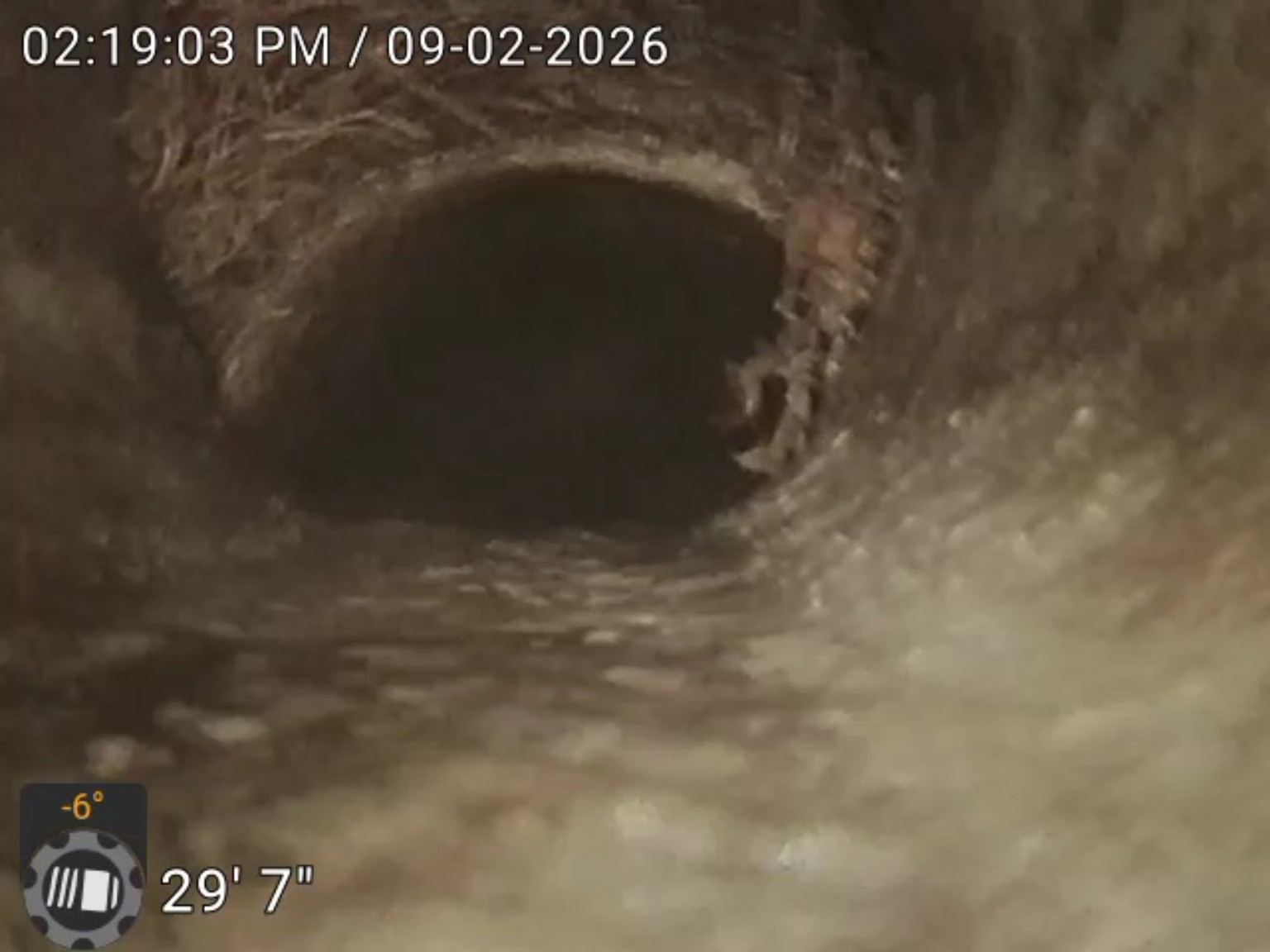
The findings help distinguish material that can be removed from a connection that may need repair assessment. Read the complete roots and joint-offset case study in French.
How to reduce recurring drain problems
- Keep grease, food scraps and coffee grounds out of kitchen drains.
- Use drain screens to catch hair and remove the collected material regularly.
- Keep wipes, hygiene products and other foreign objects out of toilets.
- Keep cleanouts accessible and retain previous inspection videos and reports.
- Choose a maintenance interval based on the line’s use, blockage history and inspection findings.
If a cleaned drain blocks again, record when it happened and which fixtures were affected. That history helps guide the next investigation.
What determines the work required?
The intervention depends on the affected drain, available access, type of obstruction and condition of the pipe. A recurring blockage may require camera inspection to investigate why it returns.
When booking, tell us the property address, affected fixtures, floor, available cleanout and anything already attempted. Ask what the visit includes, whether camera inspection or locating is needed, and which video or report deliverables are included.
Need help with a blocked drain in Montreal?
Flow Pro specializes in drain unclogging, mechanical cleaning, hydrojetting and camera inspection in Montreal, Laval and the North Shore. Describe the problem and we’ll help prepare the right intervention.
Emergency service available 24/7. Call to confirm availability and arrival time.
When it doesn’t flow, call the pro.