
Professional grease-buildup removal
Hot-water hydrojetting to remove grease from drains
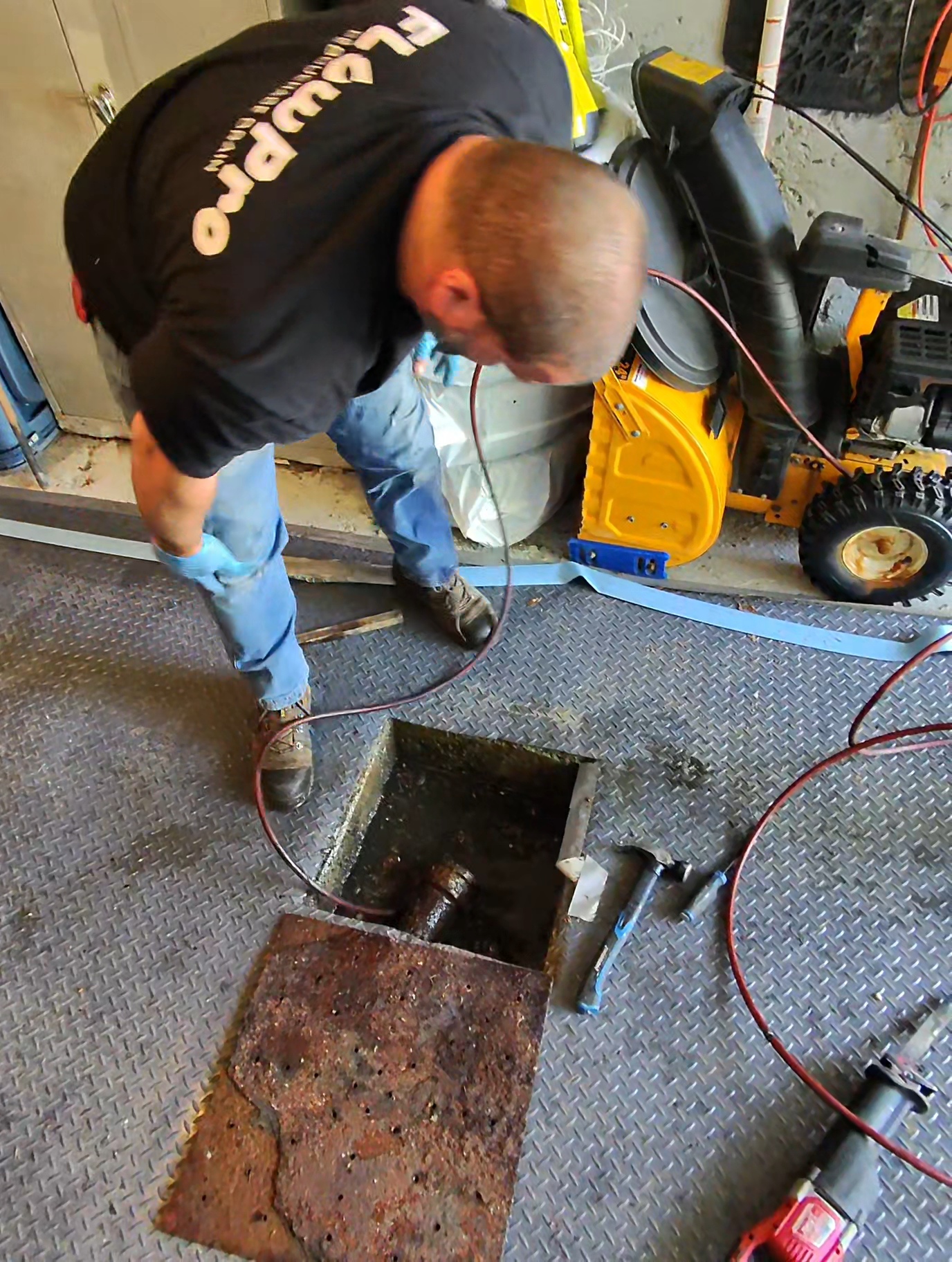
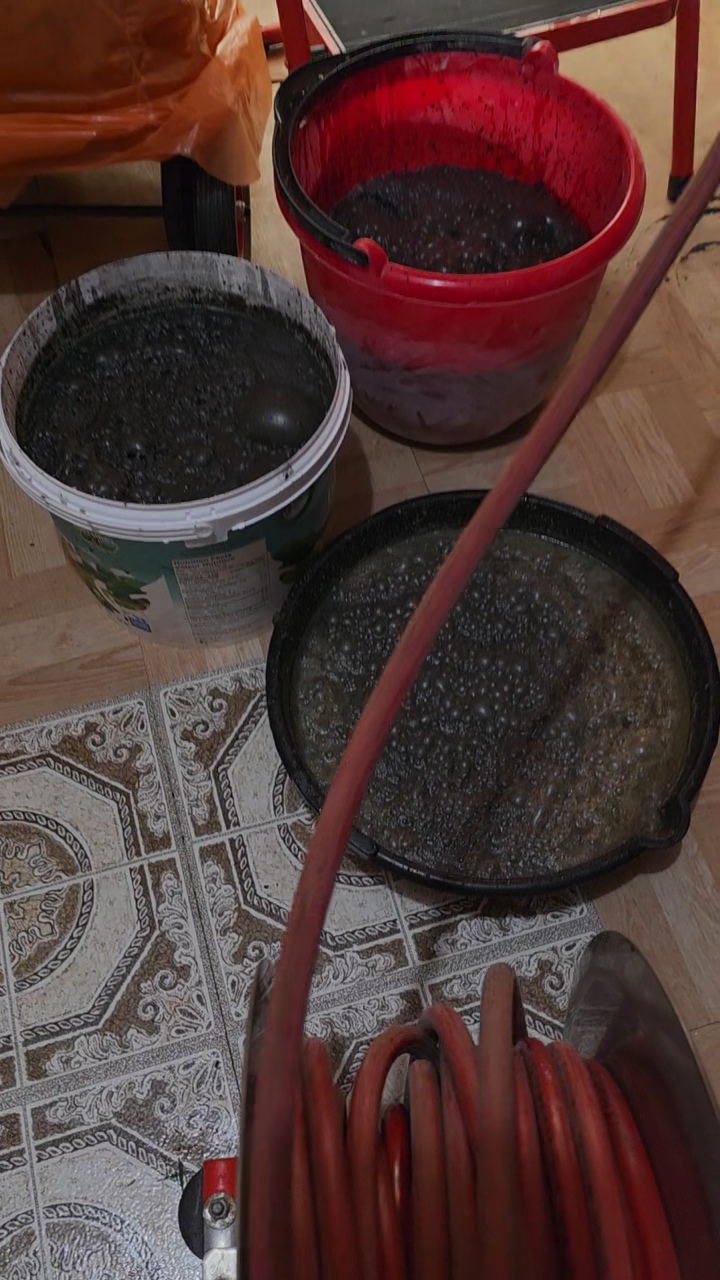
Grease does not always form one simple clog. It can harden along the pipe walls and progressively reduce the usable diameter. Hot water helps soften these deposits, but effective cleaning also depends on the correct nozzle, sufficient flow, controlled passes and proper recovery of the material removed.
Specialized grease removal
Why use hot water inside a drain?
Heat assists with degreasing; it does not replace the correct nozzle or the jet’s mechanical action. Depending on the cleaning direction and access point, removed material is brought back toward the entry point, recovered or flushed in a controlled manner.
A traditional cable may only open a passage through certain clogs. The drain starts flowing again without necessarily regaining its full capacity. When the pipe, access and building conditions allow it, hydrojetting removes the obstructions and deposits that continue to restrict the pipe.
- Kitchen grease attached to pipe walls
- Drains that clog again after cable cleaning
- Kitchen stacks in condos and multi-unit buildings
- Restaurants and commercial kitchens
- Preventive maintenance for high-use drain lines
Powerful equipment used with control
Our hot-water hydrojet equipment
Our system delivers up to 8 gallons per minute. During cleaning, pressure remains at 3,000 psi or less, in accordance with NASSCO guidance, and is reduced further according to the pipe’s age and condition.
These hose sizes and flow specifications describe our equipment; they are not universal values for every jetter. We choose the nozzle, temperature, pressure and flow according to the diameter, material, visible condition, bends and type of deposit. A two-inch line under a sink is not cleaned the same way as a four- or six-inch main drain.
The nozzle determines the work
Hot water alone does not clean a drain line
The wrong nozzle may only open a narrow passage, move material in the wrong direction or leave the pipe walls dirty. We select the tool according to the obstruction and direction of work.
Penetrating nozzle
Rear jets propel the nozzle forward while a front jet helps open the blockage. Its main purpose is to establish flow. It can also work through grease when the direction of cleaning allows debris to be brought back toward the access point.
Forward-jetting nozzle
It pushes solid material such as soil or stones lying along the bottom of the pipe. Because it tends to move backward, it requires precise control so the pressurized hose never exits the drain line.
Rotating nozzle
Its rotating head works on grease and some fine roots. Removed material must then be brought back and recovered at the access point instead of being left farther down the line.
Chain nozzle
It can remove roots and wall deposits, but it is aggressive. A short, controlled test is required in old or fragile pipes, including clay, deteriorated cast iron, Orangeburg and cracked plastic.
Common applications
When does hot water provide a real advantage?
Recurring kitchen-drain clogs
The sink works after being cleared, then slows down again. A layer of grease may remain on the wall even though a passage was opened through the centre.
Condos and multi-unit buildings
Several kitchens may connect to the same stack. Cleaning then requires suitable access and coordination with the units below the work area.
Commercial kitchens
Restaurants produce a high grease load. Hot water can form part of corrective cleaning or a maintenance program designed for the building.
Reduced flow without a solid clog
A pipe may still allow some water through while deposits have consumed a large portion of its internal diameter.
Grease over a long distance
When buildup extends for several metres, sufficient flow and controlled passes help move the residue toward the access point.
Preventive maintenance
A schedule based on usage and blockage history can reduce backups in heavily used drain lines.
Winter service
Thawing drains and pipes blocked by ice
Hot-water hydrojetting can also be used to thaw certain drain lines blocked by ice.
The nozzle gradually creates a passage through the frozen accumulation while the released water is controlled and removed. We do not simply send hot water into a pipe without knowing where that water can exit.
Before starting, we check the access point, pipe material, probable route, connected fixtures and whether the water can be discharged without causing a backup inside the building.
A frozen line can also reveal poor slope, a section exposed to cold, insufficient insulation, air infiltration or water that remains stagnant in the pipe. Once flow is restored, we test the drainage and explain the conditions that could cause the line to freeze again.
The right method for the deposit
Hot water, cold water or mechanical cleaning?
Hot water is not automatically better. Its main advantage is grease removal. For other problems, flow, nozzle selection, a mechanical chain or a flexshaft may matter more than temperature.
Hot-water hydrojetting
- Softens greasy deposits
- Works grease with an appropriate nozzle, controlled flow and a maximum pressure of 3,000 psi
- Useful for kitchens and drain lines with a heavy grease load
- Requires access that allows the water to be controlled
Other methods
- Flexshaft cleaning for many small kitchen branch lines
- Cold water may be sufficient for some loose debris
- Mechanical chains and inspection for roots
- Targeted extraction for a solid object
Pouring boiling water down a sink is not equivalent to hydrojetting. That water cools quickly and provides neither the mechanical action nor the continuous flow needed to clean several metres of pipe.
For a broader overview of the technology, visit our main page about hydrojetting services in Montreal and Laval.
A structured intervention
How does the cleaning process work?
Confirm the symptoms
We determine which fixtures are affected, whether water is still draining, whether the problem is recurring and whether chemical drain cleaners were used.
Identify the drain line
We distinguish a local trap or branch line from a shared stack or main drain. This determines the access and equipment required.
Evaluate the access
A cleanout in the basement, on the first floor or outside generally allows better water containment than an access point several storeys above.
Inspect before cleaning when possible
An initial inspection may reveal the material, diameter, bends, defects and type of obstruction. A camera should never be used to push through a blockage.
Open the line when required
If the line is completely blocked and full, we first use a small tool or penetrating nozzle to lower the water level and improve visibility.
Select the nozzle and settings
The job may require a penetrating, forward-jetting, rotating or chain nozzle. Working pressure does not exceed 3,000 psi and may be reduced according to the pipe.
Clean without forcing the hose
We let the nozzle work, monitor its progress and recover material returned to the access point. Forcing the hose can tangle or trap it inside the line.
Verify after cleaning
A final camera inspection verifies the visible condition of the drain. Hot water is stopped before inspection because steam can fog the lens and interfere with visibility.
Safety and water control
Why does building access affect our decision?
Hydrojetting is effective only when water and debris can be controlled. We do not accept the risk of property damage simply because the equipment can enter the pipe.
First floor or basement
Access at ground level, in a basement or outside generally simplifies setup, material recovery and monitoring of potential exit points.
Third or fourth floor
We may require access to the units below. If occupants are away and the risk cannot be controlled, we may use a flexshaft instead or postpone hydrojetting.
Old fittings or drum traps
A glued, corroded or fragile fitting should not be forced. We look for another access point or refer plumbing modifications to a trusted partner.
Chemical drain cleaners
We do not handle chemical drain cleaners. Tell us which product was poured into the drain and when. Never mix products or add hot water.
Camera and hot water
A camera may monitor a jetter when it remains at least two feet behind the nozzle. Hot water is avoided during diagnostic inspection so steam does not fog the lens.
Cross-bored utility line
If a gas, water, electrical or telecommunications line crosses the drain, cleaning must stop immediately and the responsible utility must be contacted.
For multi-unit properties, learn more about our condo drain maintenance services in Montreal.
Limits matter as much as power
When is hot-water hydrojetting not the first choice?
| Situation | Why we proceed cautiously | Possible next step |
|---|---|---|
| Trapped solid object | Water could push the object farther away without removing it. | Mechanical extraction or targeted inspection. |
| Completely full drain line | Added flow could back up toward the building. | First create a controlled passage. |
| Broken or collapsed pipe | Cleaning cannot correct a structural defect. | Camera inspection, locating and repair by a trusted partner. |
| Small localized clog | The added water volume is not always necessary. | Flexshaft cleaning with a head suited to the deposit. |
| Lower units are inaccessible | Potential exit points cannot be monitored. | Coordinate access or select a mechanical method. |
| Active chemical products | There is a risk of splashing and exposure. | Inform the team and have the timing of the intervention reassessed. |
| Cross-bored utility line | A nozzle or tool could damage a gas, water, electrical or telecommunications service. | Stop cleaning immediately and contact the responsible utility. |
| Failure after repeated attempts | A nozzle or tool that comes back polished, as if sandblasted, may indicate a collapsed line where the tool is striking soil. | Stop, locate the area and refer repairs to a trusted partner. |
We do not automatically exclude ABS, PVC, cast iron or another material. We adjust the temperature and settings to its condition. An old clay pipe deserves particular attention because it may be cracked, displaced or collapsed.
A specialized service
Why choose Flow Pro for hot-water hydrojetting?
Frequently asked questions
What to know before booking
Is this the same as pouring boiling water down the sink?
No. Hydrojetting combines controlled temperature with continuous flow, appropriate pressure and a nozzle that acts on the pipe walls. Water poured into the sink cools quickly and does not provide the same mechanical action.
Does hot water remove all grease?
It helps soften and detach accessible grease. The result depends on access, diameter, length, deposit thickness and pipe condition. Poor slope or a structural defect can encourage buildup to return.
Should a camera be used before hydrojetting?
An initial inspection is useful when visibility permits. With a solid blockage submerged in dirty water, the level must first be lowered. A final inspection is then recommended to verify the cleaning. We stop the hot water before this inspection because steam can fog the lens.
Can hydrojetting be used in an upper-floor condo?
Sometimes. On the third or fourth floor, we may require access to the units below, select a mechanical method or postpone hydrojetting if the risk of damage cannot be controlled.
Can you thaw a drain with hot-water hydrojetting?
Yes, we can thaw certain drain lines obstructed by ice. We first check the access, material, probable route and where the water can discharge. Temperature, flow and pressure are adapted to the pipe. After thawing, we test drainage and look for conditions that could cause the line to freeze again.
Does hot water cut roots?
No. The work is performed by a rotating nozzle, chain nozzle or appropriate mechanical tool. If a camera simultaneously monitors the jetter, it remains at least two feet behind the nozzle. Roots also indicate an entry point that may require repair.
What pressure do you use to clean a drain?
We do not exceed 3,000 psi during cleaning. Pressure may be reduced according to the pipe’s age, material, condition and the nozzle being used.
Do you provide a video or report?
A video and written report can be supplied upon request when inspection forms part of the intervention. Files are generally sent by Google Drive link through email or text and retained for approximately six months.
Do you guarantee the drain will not clog again?
No. We cannot control what enters the drain after the intervention, and cleaning cannot correct poor slope or structural damage. We explain what was cleaned, any limitations found and the preventive measures recommended.
How much does hot-water hydrojetting cost?
Pricing depends on the drain line, access, diameter, floor level, whether the line must first be opened and whether inspection is required. Review our current drain-cleaning prices. We confirm the applicable scope and price before work begins.
Professional licences and certifications
NASSCO BSDI® certified inspections • NASSCO certified drain cleaning
Professional, insured service performed with equipment suited to the drain system being inspected.