
If water is coming back up through your shower drain, the shower itself may not be the real problem. In many cases, the blockage is farther downstream in a shared branch line or the home's main drain.
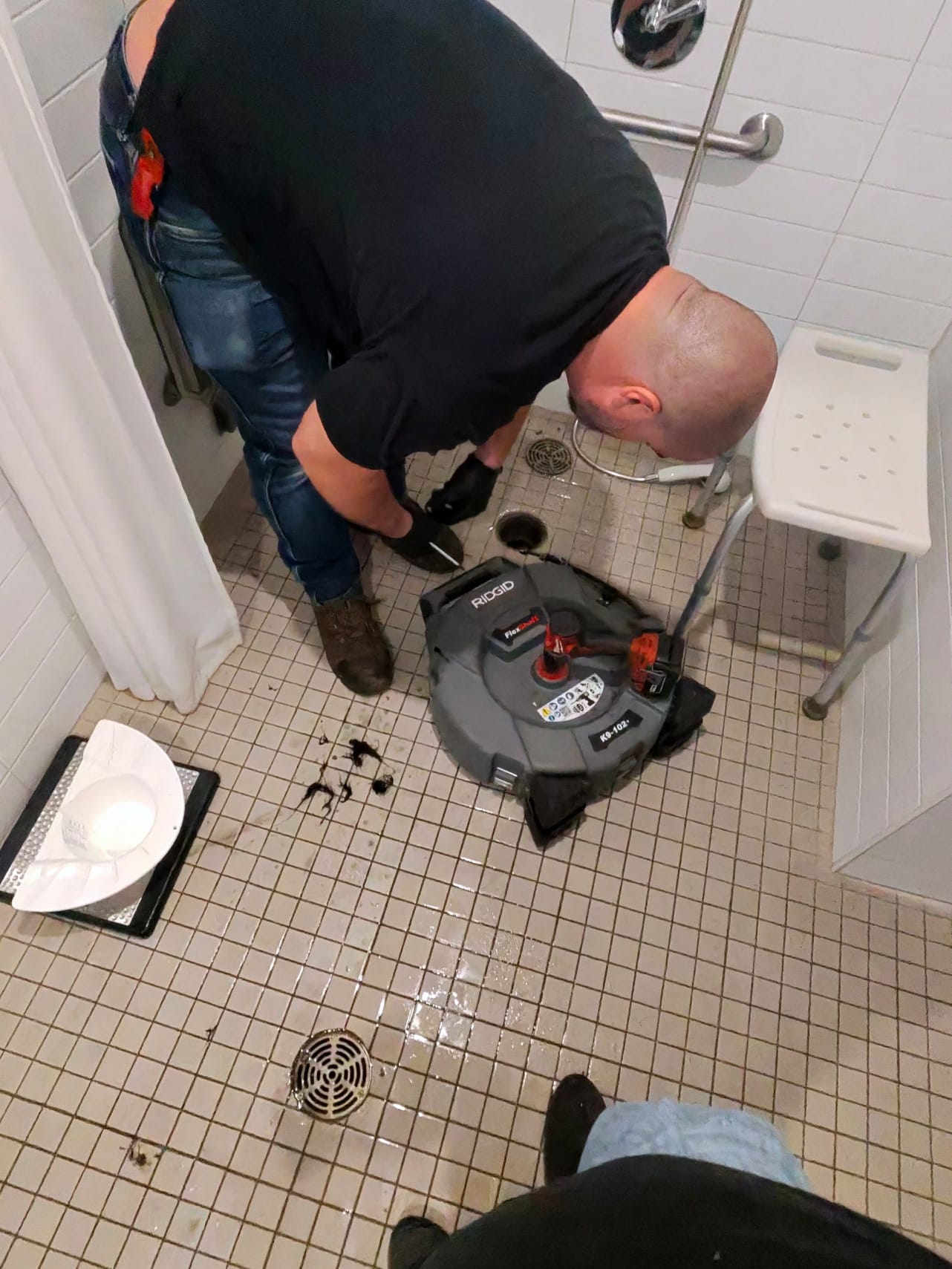
This is a problem we regularly see in homes and multi-unit properties throughout Montreal, Laval and the North Shore. One of the biggest clues is when the shower reacts to something happening somewhere else in the building — flushing a toilet, draining a washing machine or using another fixture.
If water rises in the shower when another fixture is used, don't assume you simply have hair stuck in the shower trap. The obstruction may be much farther down the drainage system.
Why is water backing up into the shower?
Your shower is often one of the lowest drain openings in the home. Wastewater normally leaves the building by gravity. If a blockage prevents that water from continuing through the drainage system, it may begin travelling back toward the lowest available opening.
That is why a problem in a larger shared line or main sewer drain can first appear as water rising inside the shower.
If several fixtures are affected at the same time, the likelihood of a larger downstream blockage increases. Once the line has been opened enough to inspect, a camera drain inspection can help determine why the problem occurred.
Warning signs to watch for
A shower backup often isn't the first symptom. The drainage system may have been giving warning signs before water actually started coming back up.
What should you do when water starts backing up?
Stop using water.
Avoid flushing toilets, running the washing machine, taking another shower or repeatedly testing the drain.
Every additional litre of water entering a blocked drainage system has to go somewhere. If the line is severely restricted, continued water use can turn a small backup into wastewater spreading across a bathroom or basement floor.
Don't pour chemical drain cleaner into it
Chemical drain cleaners are unlikely to solve a blockage located several metres away in a larger main line. They can also remain trapped inside standing wastewater, creating an additional hazard when the line is opened.
Don't assume the shower itself needs to be snaked
If only the shower drains slowly, a local hair or soap blockage is possible. But if the shower fills when you flush a toilet or run another appliance, cleaning only the shower trap may not address the actual obstruction.
See a shower drain unclogging in action
This is a real Flow Pro Drain intervention showing a blocked shower drain being cleared. Watch the water begin flowing normally again once the obstruction is removed.
Real Flow Pro Drain service call — blocked, cleaned and flowing again.
How does Flow Pro Drain fix the problem?
The correct method depends on where the obstruction is located and what is causing it. We don't automatically use the same equipment on every blockage.
Identify which fixtures are affected
This helps determine whether the blockage is local to the shower, inside a shared branch or farther downstream in the main drain.
Open the blockage
Mechanical drain-cleaning equipment may be used to break through and remove localized obstructions.
Clean buildup when necessary
For grease, sludge and heavy deposits, professional hydrojetting may be appropriate when the pipe condition and access allow it.
Inspect recurring problems
Once visibility is available, a drain camera inspection can help identify roots, buildup, damaged pipe or other underlying problems.
When the same problem keeps returning, the important part is understanding why it backed up in the first place.
Can tree roots cause water to come up through the shower?
Yes. Roots can enter underground sewer lines through joints, cracks and damaged sections of pipe. As they grow, they can catch paper and debris, progressively reducing the space available for wastewater to pass.
Eventually the line may no longer handle the volume coming from toilets, sinks and appliances. Because the shower is often one of the lowest fixtures, that is where the backup can become visible.
Can hydrojetting fix a shower backup?
Sometimes, but hydrojetting is a cleaning method — not the diagnosis. It can be useful when grease, sludge or heavy deposits are contributing to the restriction. Other blockages may be better handled mechanically first, especially when access is limited or the condition of the pipe is unknown.
For grease-heavy lines, Flow Pro also uses hot-water hydrojetting when appropriate. The method is chosen according to the symptoms, access point and condition of the drain.
What if the backup goes away by itself?
Don't assume the problem is solved.
A partially blocked line may slowly drain after water use stops. Everything can appear normal again until the next toilet flush, shower, dishwasher cycle or load of laundry sends another large volume of water into the restricted pipe.
Intermittent backups are often an opportunity to investigate the line before it becomes completely blocked.
When should you call a drain specialist?
Have the drainage system checked when wastewater comes up through the shower, the shower reacts when another fixture is used, multiple drains are slow, toilets are gurgling, the problem keeps returning or a previous cleaning only solved the issue temporarily.
If wastewater is actively entering the shower or another low fixture, stop using water and contact an emergency drain cleaning service promptly to reduce the risk of a larger backup.
Frequently asked questions
Why does my shower fill with water when I flush the toilet?
Why does my shower back up when the washing machine drains?
Is dirty water backing up into the shower an emergency?
Do I need a camera inspection?
Can a camera pass through a completely clogged drain?
Water backing up into your shower?
Stop using water and deal with the restriction before a small backup becomes a bigger mess. Flow Pro Drain provides drain cleaning, camera inspections and hydrojetting throughout Montreal, Laval and the North Shore.
Call 438-320-0500For an active backup, see our 24/7 emergency drain service.