
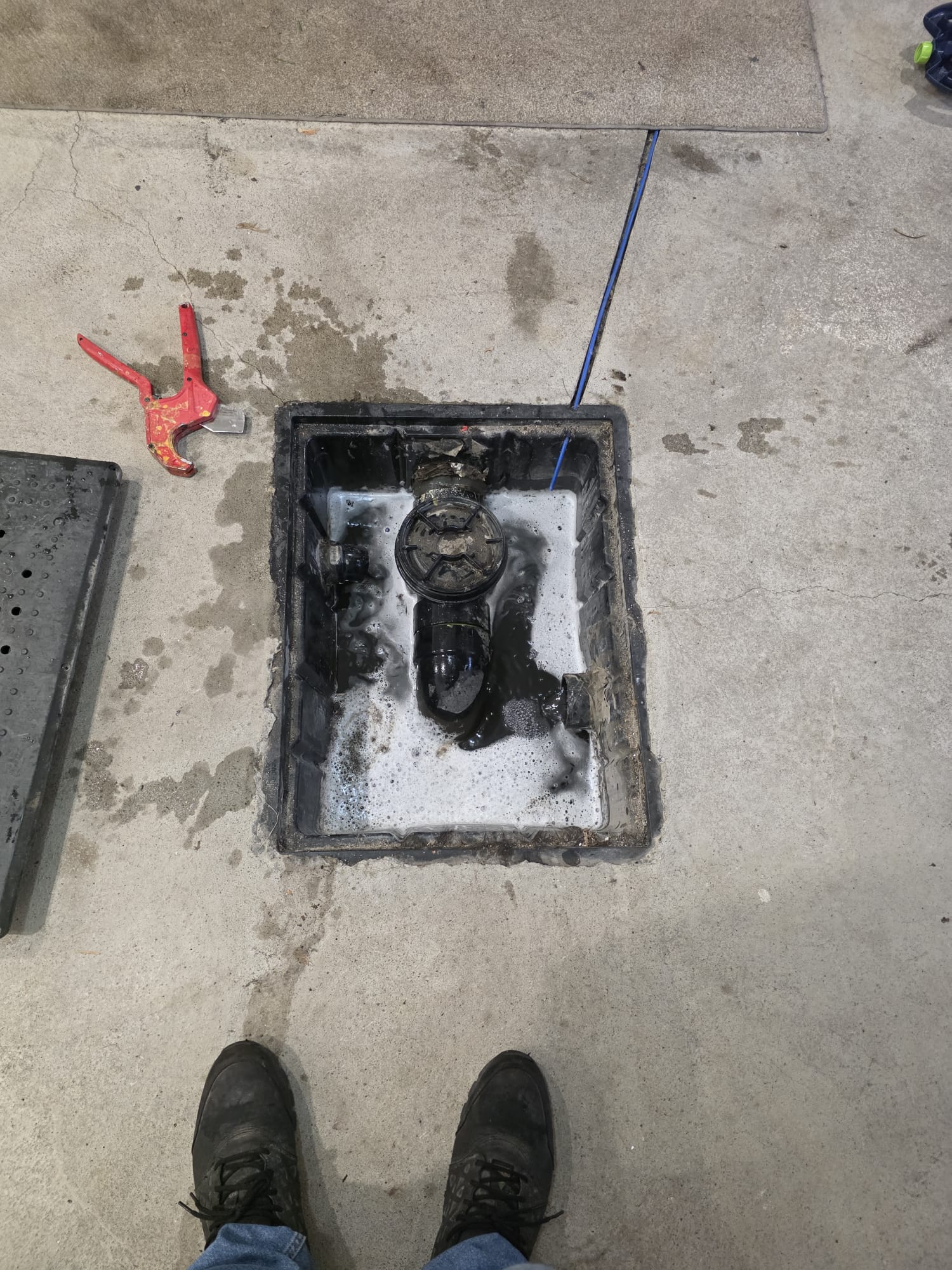
A garage sump pit holding water, mud, sand or road salt is not necessarily completely blocked. In many Montreal garages, these pits are designed to collect water while allowing heavier material to settle before the water continues through the drainage system.
The problem begins when the water level keeps rising, the pit stops draining, sediment reaches the outlet, a pump runs continuously, or dirty water begins backing up into the garage.
Montreal winters make garage drainage systems work especially hard. Vehicles bring in snow, road salt, sand, gravel and slush every day. The snow melts and the water may drain away, while the heavier material remains behind. Over several winters, that buildup can become surprisingly deep.
Quick Answer
A small amount of standing water in a garage sump pit can be completely normal.
The warning signs are a water level that keeps rising, extremely slow drainage, overflowing, excessive sediment, a pump that never stops, or dirty water entering the garage when plumbing fixtures are used elsewhere in the building.
Possible sewer backup: If dirty or foul-smelling water rises in the garage when someone flushes a toilet, uses a washing machine or drains another fixture, stop using water in the building. The garage drain may be the lowest escape point for a blocked main drain.
First: What Type of Garage Drain Do You Have?
Homeowners often use the term sump pit for several different drainage systems. Identifying the installation is important because each system behaves differently.
1
Garage Floor Drain
A standard floor drain collects water from the garage floor and directs it into a drainage pipe. Some contain a trap that naturally retains water below the grate.
2
Catch Basin or Retention Pit
A deeper basin allows sand, gravel, road salt and other heavy material to settle before water enters the downstream piping.
3
Sump Pit With a Pump
If gravity cannot move the water out of the garage, a pump may lift it through a discharge line. The float, pump, check valve and discharge pipe can all affect the water level.
4
Exterior Trench Drain
A channel drain in front of the garage door captures rain and melting snow. Its grate may look clear even when the basin or outlet below is packed with debris.
What about a foundation-drain sump?
A sump receiving groundwater or water from a foundation drainage system has a different purpose. If the water level mainly rises after heavy rain or snowmelt, a professional French drain inspection may be more appropriate.
What Your Garage Sump Pit Is Telling You
| What You Notice | Possible Cause | What It May Need |
|---|---|---|
| A little clear water stays at the same level | Normal retained water or a filled trap | Monitor it if drainage works normally |
| Sand, salt or mud is approaching the outlet | Sediment buildup | Remove solids and clean the basin |
| Water drains very slowly | Partially restricted outlet pipe | Mechanical cleaning or hydrojetting |
| Pump starts and stops constantly | Float, valve, return flow or continuous water entry | Inspection of the pump system and drain |
| Water rises during rain or thaw | High incoming volume, frozen outlet or pump issue | Drain/discharge inspection |
| Sewer smell comes from the drain | Dry trap, deposits, bad connection or sewer backup | Cleaning and drainage diagnosis |
Why Is My Garage Sump Pit Full of Mud?
In Quebec, this is one of the most common garage drainage problems.
Vehicle tires continuously bring road salt, sand, gravel, snow, slush and dirt into the garage. The snow melts, the water eventually drains, but the heavier material settles at the bottom of the pit.
Over time, that sediment layer gets deeper. Eventually it may reach the outlet and reduce the amount of water the pit can hold before overflowing.
One of the most common mistakes is trying to blast all that material into the drain using a garden hose or pressure washer.
That can move the problem instead of solving it. A manageable amount of sediment inside the pit can become a compact blockage farther inside the pipe.
10 Common Garage Sump Pit Problems
1. Sand, Salt and Mud Have Filled the Bottom
If the pit seems much shallower than it once was, years of sediment may simply have reduced its capacity.
Removing this material helps restore the usable volume of the basin and prevents solids from migrating into the outlet pipe.
2. The Outlet Pipe Is Partially Blocked
A partially restricted pipe may still allow small amounts of water to escape. The problem becomes obvious when melting snow, heavy rain or floor washing suddenly introduces more water than the pipe can handle.
Depending on the pipe and obstruction, cleaning may involve mechanical equipment or professional hydrojetting.
3. The Exterior Trench Drain Is Clogged
Leaves, gravel, road debris and sediment can accumulate underneath the grate of an exterior channel drain.
If water pools outside the garage while the interior pit remains relatively normal, the exterior drain may be the actual problem.
4. The Pump or Float Is Dirty
Small stones and sediment can interfere with the pump intake or prevent the float from moving freely.
- The pump starts too late.
- It never starts.
- It cycles every few seconds.
- The motor runs but the water level does not drop.
Never handle submerged electrical equipment while it is energized.
5. The Check Valve Is Dirty or Stuck
A check valve prevents pumped water from flowing back into the pit. If sediment prevents the valve from closing properly, water may return immediately after the pump stops.
6. The Discharge Line Is Frozen
This is particularly relevant during Montreal winters.
A pump may be operating normally while the pipe carrying water away from the building is frozen or obstructed.
- The pump runs but water does not leave.
- The problem appears during extreme cold.
- The pipe vibrates but little water exits.
- The pit fills quickly when temperatures rise and snow starts melting.
7. Sewage Is Backing Up Through the Garage Drain
If the water is dirty, smells strongly of sewage, contains waste, or rises when someone uses another plumbing fixture, the problem may be a blocked main drainage line.
The garage drain may simply be one of the lowest openings in the building.
Stop using water. Flushing toilets, showering or running a washing machine can push additional wastewater into the garage. This may require emergency drain service.
8. The Garage Drain Smells Like Sewage
A sewer smell does not automatically mean the main sewer is blocked.
- Dry trap
- Stagnant water
- Organic deposits
- Improper connection
- Partial backup
9. The Pipe Is Damaged or Has Poor Slope
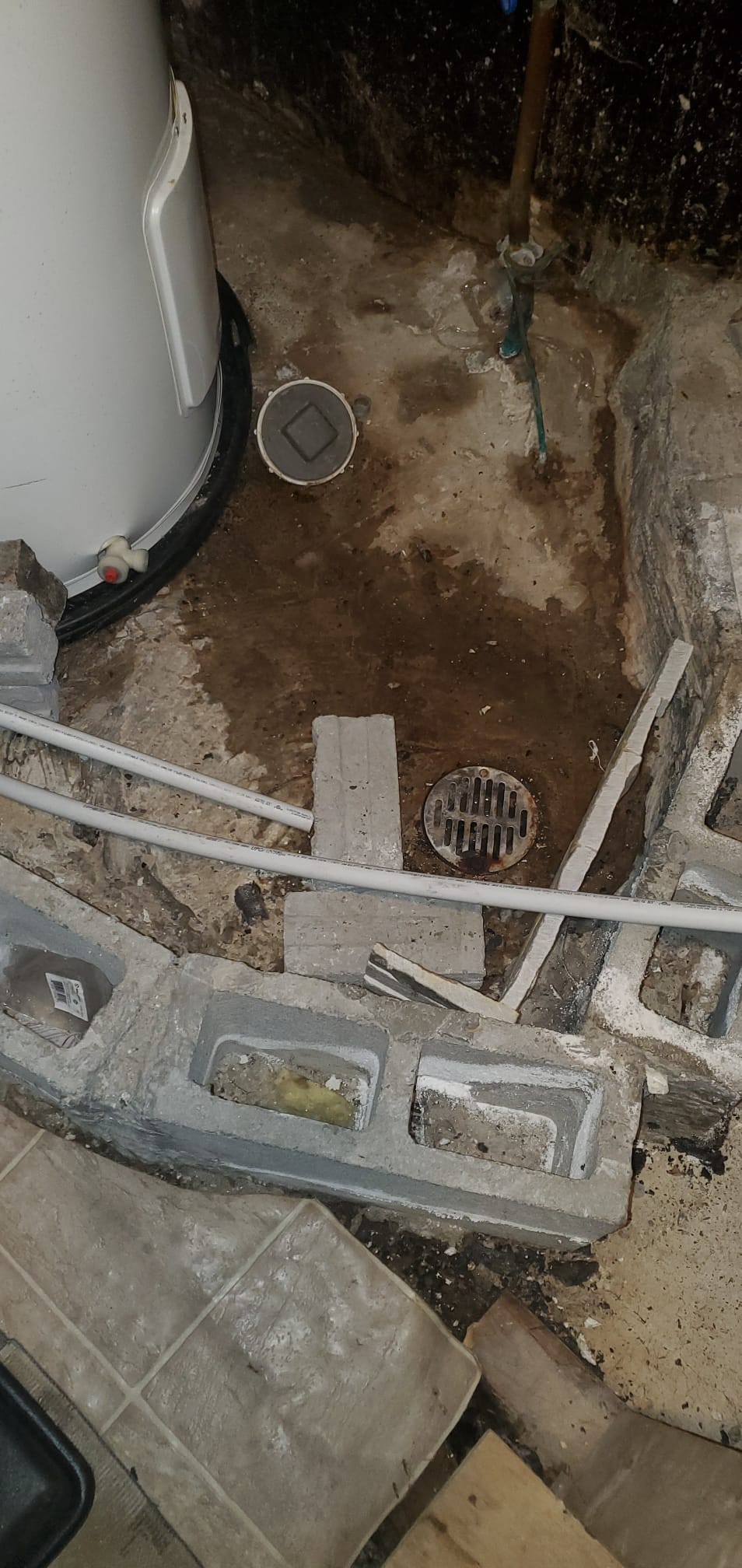
If the drain is professionally cleaned but keeps blocking in the same location, debris may not be the underlying problem.
- A low spot or belly
- A separated joint
- A collapsed section
- Poor slope
- Heavy deterioration
Once the line is sufficiently clear, a drain camera inspection can help identify these conditions.
10. Oil, Fuel or Chemicals Are in the Pit
If you see an oily rainbow sheen or smell gasoline, solvent, antifreeze or another chemical, do not treat the pit like an ordinary clogged drain.
Do not mix chemicals or intentionally pump contaminated liquid into the drainage system.
What Can You Safely Check Yourself?
Look at the Pit
- Is debris covering the grate?
- How deep is the sediment?
- Is the outlet visible?
Watch the Water
- Is the level rising?
- Does it slowly fall?
- Does it change during rain?
Listen to the Pump
- Does it start?
- Does it run constantly?
- Does the level actually fall?
Check Other Drains
- Are toilets gurgling?
- Are other drains slow?
- Does water rise when fixtures are used?
What You Should Avoid Doing
- Do not push a large amount of mud into the pipe with a pressure washer.
- Do not pour chemical drain opener into an unknown drainage system.
- Do not mix bleach, acids, drain cleaners or degreasers.
- Do not reach into water containing energized electrical equipment.
- Do not continuously add water to a pit that is already full.
- Do not assume dirty water is rainwater if other plumbing fixtures are reacting.
How Flow Pro Diagnoses and Cleans Garage Drains
There is no single cleaning method that works for every garage drain or sump pit. The correct approach depends on the system, sediment, pipe condition and where the water is supposed to go.
Identify the System
We determine whether we are dealing with a floor drain, retention basin, pumped sump, exterior trench drain or foundation-drain sump.
Evaluate Water and Sediment
We check the water level, available depth, outlet position and amount of sand or mud inside the basin.
Remove Accessible Solids
Where required, accumulated sand and mud are removed instead of simply being pushed deeper into the line.
Inspect Accessible Components
Pumps, floats, valves and other accessible components may provide important information about why the water level is abnormal.
Clean the Drain
Depending on the obstruction and pipe, mechanical equipment or hydrojetting may be used to restore flow.
Camera Inspect When Useful
A camera can be used once enough sediment and dirty water have been removed to provide useful visibility.
Test the Drainage
We confirm that the pit accepts water and that the connected drain can evacuate it properly.
When Does Hydrojetting Make Sense?
Professional hydrojetting can be effective when fine sediment, grease or deposits are coating the inside of the garage drain.
But hydrojetting should not automatically be used simply because a pit contains mud.
The technician first needs to consider the pipe material, diameter, condition, access point and where loosened material will travel.
Flow Pro's hot-water hydrojet equipment can provide approximately 3,500 PSI and 8+ GPM, but proper drain cleaning is about controlling pressure and flow — not simply using maximum power.
Can You Put a Camera Down a Garage Drain?
Often, yes.
A camera inspection can help locate:
- A collapsed pipe
- A separated joint
- A low spot
- A recurring sediment pocket
- An obstruction
- An unexpected pipe connection
Important: A camera cannot see properly through thick mud or opaque dirty water. If the pipe is completely filled with debris, it normally needs to be opened and cleaned first.
How Often Should a Garage Sump Pit Be Cleaned?
There is no universal cleaning schedule. A residential garage used by one vehicle experiences very different conditions from an underground parking garage used by hundreds of vehicles.
A good habit is to inspect the pit after winter, once most snow and road salt have disappeared.
For condominiums, commercial garages and underground parking facilities, scheduled preventive drain maintenance can help identify sediment buildup before it causes an overflow.
When Is a Full Garage Sump an Emergency?
Call quickly if:
- The water level continues rising.
- The garage is beginning to flood.
- Sewage is entering through the drain.
- Several plumbing fixtures are backing up.
- A pump runs without lowering the water.
- Water is approaching electrical equipment.
- A drain appears frozen while water continues entering.
- The blockage returns immediately after cleaning.
Garage Drain Problem in Montreal?
Flow Pro Drain specializes in drain cleaning, hydrojetting and camera inspections throughout Montreal, Laval and the North Shore. If your garage sump is filling with water, mud or sediment, the goal is to determine why before simply pushing the problem farther into the drainage system.
Call 438-320-0500 Request Service
Frequently Asked Questions
Is it normal to have water sitting in a garage sump pit?
Yes. Some sump pits and trapped floor drains naturally retain water. A level that keeps rising, extremely slow drainage or a significant loss of available capacity is more concerning.
Why does my garage sump keep filling with mud?
Vehicles continuously bring sand, snow, road salt and dirt into the garage. The water drains away while heavier material settles at the bottom of the pit.
Can I use a pressure washer to clean the pit?
You should avoid forcing a large mass of sediment into the outlet pipe. That can create a blockage farther downstream. Accessible solids should generally be removed first.
Why does my sump pump keep running?
Possible causes include continuous incoming water, a blocked discharge line, a stuck float, a check-valve problem or a pump that cannot keep up with the incoming flow.
Can a blocked main sewer cause water to come up through the garage drain?
Yes. Because garage drains are often among the lowest openings in a building, wastewater from a blocked main line can sometimes back up through them.
Can Flow Pro camera inspect the garage drain?
Often yes, provided the pipe is accessible and sufficiently clear. Heavy sediment or muddy water may need to be removed before a camera can provide a useful inspection.